The Definitive Master Guide to Mechanical Puzzles, Neuroplasticity, Spatial Logic, and Systematic Problem-Solving
Explore the profound neurobiological benefits, cognitive architecture, mechanical engineering principles, and step-by-step strategies for solving high-level IQ puzzles.
1. The Neurobiology of Mechanical Puzzles
Mechanical puzzles represent one of the most effective tangible tools for stimulating neuroplasticity—the brain's capacity to reorganize itself by forming new neural pathways throughout life. When an individual engages with a complex 3D assembly or disassembly puzzle, multiple cortical and subcortical structures are activated simultaneously.
The dorsolateral prefrontal cortex (DLPFC), responsible for executive functioning, working memory, and cognitive flexibility, experiences intense engagement as you formulate hypotheses regarding spatial movements. Simultaneously, the posterior parietal cortex processes three-dimensional mental rotations, allowing solvers to anticipate how interlocking components will interact prior to physical manipulation.
2. Computational Logic & Computer Science Intuition
The mechanical puzzle is a physical embodiment of fundamental computer science concepts. Sequential discovery puzzles operate on state-machine principles, where each physical move transitions the puzzle into a new state. Solvers must map state transitions, identify recursion, and avoid circular loops.
Furthermore, disassembly puzzles train individuals in depth-first and breadth-first exploration strategies. Computer programmers, software engineers, and mathematicians frequently utilize mechanical puzzles to hone their spatial debugging capabilities.
3. Categories of Mechanical Puzzles
Interlocking Burr Puzzles
Notched wooden or metal sticks fitting together to form symmetric 3D structures.
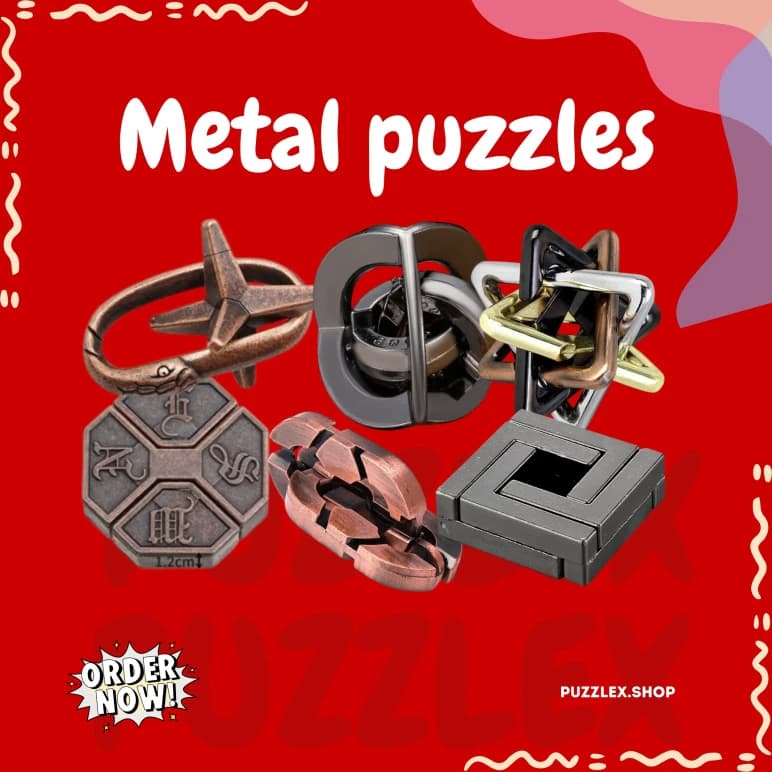
Cast Metal Wire & Disentanglement
Precision-cast zinc alloy loops requiring exact rotation angles to separate.
Sequential Discovery Boxes
Hidden compartments unlocked by discovering tools embedded within the puzzle itself.
Visual-Spatial Packing Puzzles
Constrained 3D containers where irregular polyhedral blocks must be fitted perfectly.